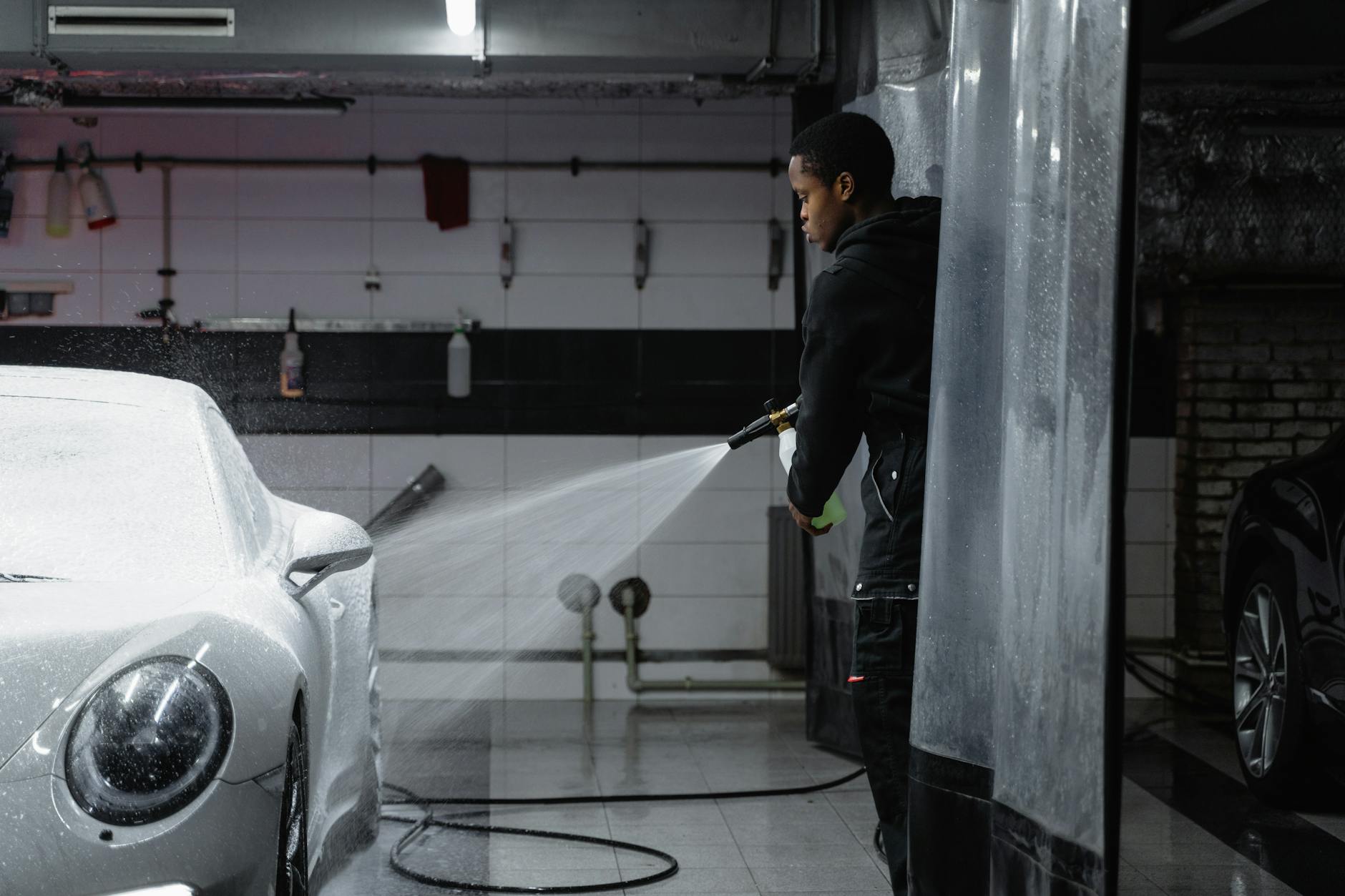
Power Washing · 7 min
Newark Power Washing Mistakes · 9 Things to Avoid Today
The nine power-washing mistakes that lift paint, drive water into siding, kill plants, and leave streaks on Newark brick. The fix list a flat-rate crew runs.
Brian Zalewski ·
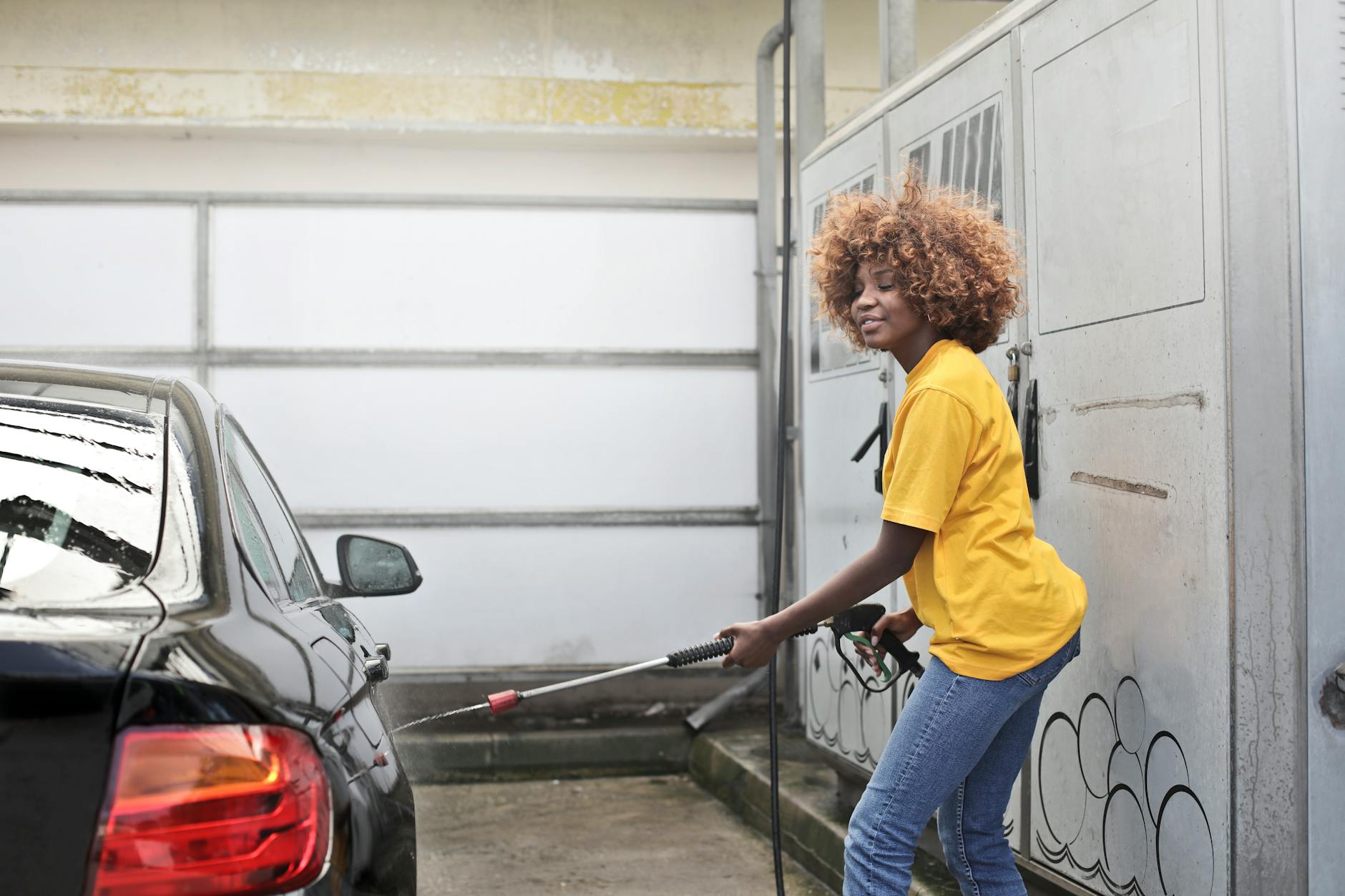
A pressure washer is a hand tool that delivers more water energy than a fire hose. Used wrong on Newark's mix of brick rowhouses, vinyl siding, and concrete stoops, it strips paint, drives water under siding, and pits soft mortar. Here are the nine mistakes a careful flat-rate crew never makes — and the safer process to use instead.
1 · Running 3,000 PSI on vinyl siding
Vinyl is rated for 1,400–1,600 PSI at most. A bare 0° tip at 3,000 PSI peels the surface coat and shoots water past the seams into the wall cavity. The fix: a 25° green tip held at 18–24 inches with a soft-wash detergent — soap does the work, water rinses. Gear breakdown.
2 · Skipping the soap dwell time
Pressure alone does not kill mildew or algae — sodium hypochlorite does. Apply a 4:1 mildewcide, let it dwell 5–10 minutes (do not let it dry), then rinse low. The dwell is where the cleaning happens. The rinse is where the show happens. New crews flip those.
3 · Washing siding bottom-up
Soap goes up, rinse goes down. Wash bottom-up and clean water races over dirty stripes, leaving streaks that flash-dry into the surface. Always pre-rinse, soap top-down or bottom-up depending on slope, then rinse top-down at low pressure.
4 · No plant pre-rinse
Foundation plantings and lawn near the wall need a heavy water soak before any soap. The pre-rinse dilutes the chemical so a few drops of soap do not burn leaves. Cover hostas and azaleas with a tarp, soak the lawn, then start. Plant damage is on the crew, not the chemical.
5 · Pointing the wand at electrical or vents
Never wash directly into a soffit vent, a dryer vent, an electrical meter, or a window AC. Water under pressure finds gaps you cannot see. The OSHA general guidance on electrical safety on residential exteriors applies here — kill the breaker if you have to wash near an outdoor outlet.
6 · Working off a wet ladder
A pressure washer on a ladder is a fall risk because the recoil from the wand pushes the operator backward. Use a telescoping wand from the ground for two-story siding. Newark's brick rowhouses are usually two stories — a 24-foot wand reaches the gutter line without leaving the ground. We never put a crew on a ladder with a live wand.
7 · Old soft mortar at full PSI
Pre-1940 Newark brick uses lime-soft mortar that scours out at 3,000 PSI. The fix: drop to 1,500 PSI and a 40° tip, or hand-scrub with a brass brush. Test a corner first. Power-wash service page walks the full process.
8 · No drainage plan for the runoff
Soap-laden runoff into a storm drain is a violation under the NJ DEP Division of Water Quality stormwater rules. Direct runoff onto pervious lawn, not into the street drain. For driveway washes, dam the curb cut with old towels.
9 · No post-walk with the customer
The job is not done until the customer signs off. Walk every face of the building. Look for streaks, plant damage, missed corners, and water in window tracks. The walk is the warranty. We do not leave until the line "looks right" gets a yes.
The cheap way to power-wash is to crank pressure and rip through it. The right way is the soap, the dwell, the rinse, the walk. Same time, half the damage, twice the result.
Book a Newark power-wash crew
Pick "Power washing" on the booking widget and slide the crew size + hours. Newark, Jersey City, Hoboken, and the rest of the NJ + NYC service area at the same flat rate.